Here’s my secret to great tasting food. There’s nothing that will infuse your dish with flavors that will pop in your mouth more than freshly cut herbs and vegetables. This is a traditional Puerto Rican recipe handed down in my family called sofrito. I use this to season foods. It is the base ingredient for many Puerto Rican dishes. When I cook my meals are infused with loads of flavor, lots of nutrition and loving intentions. This is my basic sofrito recipe.
What is Sofrito?
Sofrito is a mix of vegetables and herbs which is a seasoning used to give a certain flavor, aroma and taste.
What can I add sofrito to?
Just about anything:
– Chicken, meats and fish
– Seafood -Pork
– Rice – Beans
– Tortilla Espanola – Frittata
– Stew – Soups
– Eggs – Tacos
This is my basic sofrito recipe.
1 large bunch of cilantro
3 leaves of culantro
1 clove garlic
1/2 a sweet onion
1 tablespoon of olive oil
Place the cilantro, culantro, onions and garlic in food processor and process until coarsely chopped. With the motor running, add the olive oil until smooth.
Super Easy Cooking Tip
If you roast the vegetables before chopping them, your sofrito will taste even better.
Super Easy Time Saving Tip
The sofrito will keep in the refrigerator for up to 3 days. A super easy time saving tip is to freeze it for later use. You can use an ice tray just remember to cover it so it doesn’t get yucky freezer burn. Then you can pop them out and place them into a plastic zip lock bag. So the next time you go to cook you have saved yourself the time of preparing these steps.
Like I said this is my own version of a basic sofrito mix and depending on what I’m using it for I will add more vegetables. For more ideas here’s a list of fresh ingredients you can add to your sofrito:

There are many varieties of sofrito. Do you have a particular favorite?
Did you try the recipe? Tell me what you think.
~~~~~~~~~~~~~~~~~~~~~~~~~~~~~~~~~~~~~~~~~~~~~
“I cook with wine, sometimes I even add it to the food.” W.C. Fields
“Beauty fades, but cooking is eternal.” Cassandra Clare
“This is my invariable advice to people: Learn how to cook- try new recipes, learn from your mistakes, be fearless, and above all have fun!” Julia Child
 La Respuesta is an online magazine dedicated to the Boricua diaspora who aspires to be a significant resource for Puerto Ricans in the United States, offering a multitude of creative and provocative media. Guided by a collective of Boricua writers, artists, activists, and scholars in Chicago, with supporters, collaborators, and visionaries in New York City, Boston, Florida, and Rhode Island La Respuesta strives to produce a mosaic of the cultural, artistic, intellectual, spiritual, and political realities within the diverse Puerto Rican Diaspora. It moves towards building inclusive identities and perspectives that recognize the Diaspora as central to understanding the Puerto Rican people..
There purpose reads:
“For over a century, Puerto Ricans have lived and settled in the U.S. (the “Boricua Diaspora”), but now, for the first time, there are more acá than allá. In response to our growing presence and ongoing impact, La Respuesta seeks to invoke a claim to our histories and announce our stories. This will be done by highlighting our assets and distinct experiences, agitating discussion on the crucial issues, and addressing the obstacles that we face.”

I feel so honored to be a part of this project. My article about the Puerto Rican Day Parade in Chicago appears on the site. I would love for you to check them out and leave your comments. Be sure to look around as I’m sure you will find lots of good reading.
I think my obsession with the sky began in Puerto Rico as a young daydreaming girl in the backseat of my parents Nissan Sentra on our weekly road trips to visit my grandparents. My father would take a different route each time. Sometimes it was the bumpy cement highway zigzagging the island, forcefully cutting through giant mountains, pushing aside hundreds of acres of wild dark green making way for noisy metallic traffic flow. The radio dial would flip between Salsoul 98 and Casey Kasem’s top 40, whenever an annoying song came on, to camouflage cacophonous highway sounds. Passing the coastal towns of Canovanas, Rio Grande, Luquillo, Fajardo on one side, while on the other, we felt the grand depth and height of island’s mountainous interior. Just beyond little towns dangerously perched on steep mountain tops the sky would provide entertainment and put on the greatest cloud coloring and shape changing shows you could never imagine.
Other times we would cut through the islands center via old, flat tire inducing, pothole laden roads criss crossing towns with names like Gurabo, Juncos and Las Piedras. Roads which twisted gracefully, rose precariously and dipped steeply causing awkward sensations in my tummy. The belly of the mountain was wet with humidity while at her heights cold whipping winds could make you tremble. Growing impatient of her sticky embrace I would look up to catch glimpses of an orange, pink and blue sunset just beyond gaps in the canopy.

reflection of the sky among lotus flowers in a pond
When I felt misunderstood
she was my witness
When I first fell in love
she was my witness
My skies were never empty
They were bursting with movement and shooting stars
She taught me how to paint
demonstrating how colors pop and fade away in different light
She taught me nothing is permanent
moments cannot be repeated

Today she is my muse, my connection to the universe, my comfort. You will find her influence in my artworks, writings, photography and paintings.
Have you been to Puerto Rico?
Tell me what inspires your creativity.
~~~~~~~~~~~~~~~~~~~~~~~~~~~~~~~~~~~~~~~~~~~~~~~~~~~~~~~~~~~
“Always try to keep a patch of sky above your life.” Marcel Proust
“He who leaps for the sky may fall, it’s true. But he may also fly.” Lauren Oliver
“Clouds come floating into my life, no longer to carry rain or usher storm, but to add color to my sunset sky.” Rabindranath Tagore
“Don’t tell me the sky’s the limit when there are footprints on the moon.” Paul Brandt
“Excuse me while I kiss the sky.” Jimi Hendrix
“time is a tree (this life one leaf) but love is the sky and i am for you just so long and long enough” E.E. Cummings
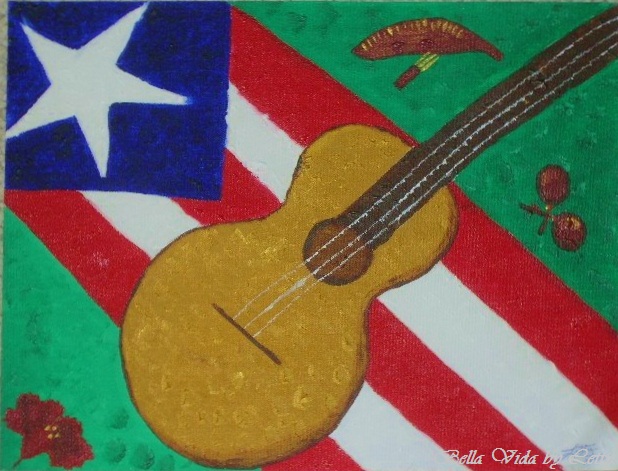
If history were taught correctly without prejudice or bias we wouldn’t need a Hispanic Heritage month.
Our history has not been properly told or documented. We are left on our own to dig and discover. Since I’m the type of person who enjoys constantly learning, I’m always finding the most fascinating things.
I also know the importance of sharing information which is why I created this tumblr blog. Not only do I share my artwork and photography there but it has become a rich resource for Latino culture and history.
These are bite sized bits of information I’m pulling together and posting in one spot. They are pointers to even more resources for you to explore.
You will find loads of information relating to Puerto Rican culture and so much more: I link to vintage photographs, museums, videos and websites where you can read free texts and peruse historical documents.
Examples of art related posts:
Mi Puerto Rico – Master Painters of the Island
Exhibit organized by the Museo de Arte de Ponce, is the first major exhibition in the continental United States devoted to Puerto Rico’s three greatest masters:
Jose Campeche (1751-1809),
Francisco Oller (1833-1917),
and Meguel Pou (1880-1968). #Video
One of my passions is vintage photography. I’ve found plenty interesting and probably never before seen images to give you an idea of how much our ancestors have left us.
 |
San Juan Railroad Terminal, Calle Commercio & Calle Harding Puerto Rico |
Examples of research related posts:
Marta Caminero-Santangelo, associate professor of English at the University of Kansas, explores how literature can shape who people are, and who they understand themselves to be as a group — specifically, in this case, as an ethnic group: Latinos. Here, she discusses her research as well as KUs new Latino/a studies minor, the power of a good story and the value of service learning.
Present day Taínos argue that they were not entirely killed off and that many of them escaped into the mountains and others intermarried with their conquerors and survived.
Examples of Music History:
The Puerto Rican Decima
An ancient poetic genre created in Spain that has been used in Puerto Rico – and Latin America – since the 17th century. Its themes were usually derived from books that poets read – or had read to them – like the Bible, Don Quixote, etc.
A found musical recording from 1939.
Examples of Political History:

Images of a strike against the sugar industry.
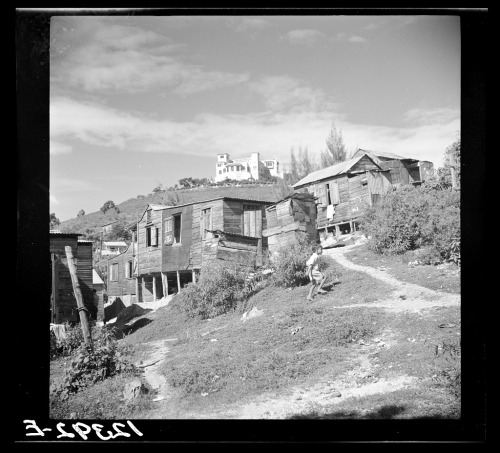
Vintage photograph of sugar plantation owners mansion sitting high above worker shacks.
Albizu Campos speech with captions in Spanish and English.
I hope you are encouraged to learn more about your cultural heritage and share it with others.
You can visit my tumbler blog HERE.

Yesterday, I was browsing through photos from last weekend’s outing when I was struck by the image of a woman I didn’t recognize. The photo captured the profile of a Taína with long black hair, high red cheekbones and a straight nose. It reminded me of Taíno cacique Hatuey, an image I actually was familiar with.
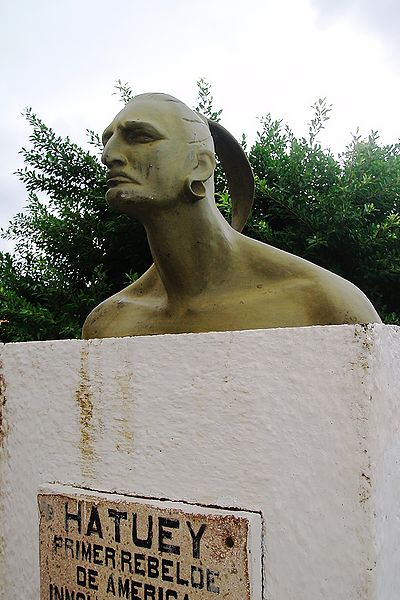
According to Bartolomé de Las Casas, Hatuey gave the following warning to Cuba:
“Here is the God the Spaniards worship. For these they fight and kill; for these they persecute us and that is why we have to throw them into the sea… They tell us, these tyrants, that they adore a God of peace and equality, and yet they usurp our land and make us their slaves. They speak to us of an immortal soul and of their eternal rewards and punishments, and yet they rob our belongings, seduce our women, violate our daughters. Incapable of matching us in valor, these cowards cover themselves with iron that our weapons cannot break…”
Eventually the Spaniards succeeded in capturing him and on February 2, 1512, Hatuey was tied to a stake and burned alive. Before he was burned, a priest asked him if he would accept Jesus and go to heaven. La Casas recalled the reaction of the chief:
“[Hatuey], thinking a little, asked the religious man if Spaniards went to heaven. The religious man answered yes… The chief then said without further thought that he did not want to go there but to hell so as not to be where they were and where he would not see such cruel people. “
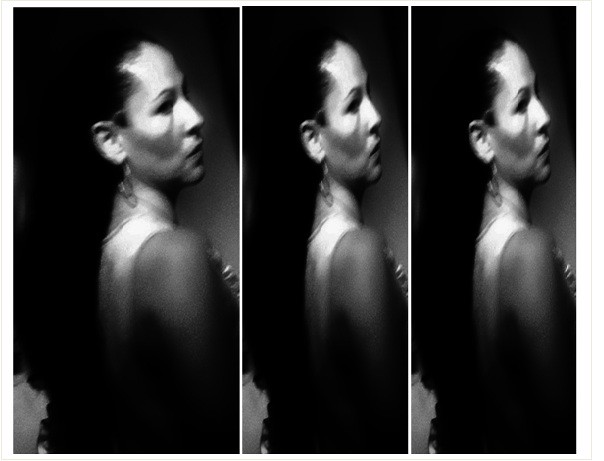
This however was not an image I was familiar with. Who is this woman? I certainly don’t spend much time in the mirror and much less checking out my profile. I was bewildered because I’d never seen this woman before. If I had any Taíno ancestors I do not know of them. I’ve never heard their names or their stories but here they are reflected in my cheekbones and straight nose. I’ve been unknowingly carrying them with me my entire life. Could I be a long lost daughter of Hatuey?
My curious nature insists on learning more and my rebellious spirit is angered at the thought I’ve been denied my true history. But that is the life of Puertoricans. We are told bits and pieces of our history for example how we are mesh of many cultures but our blindness to colonization reveals itself in these moments when we fail to be able to name our ancestors. In the process of absorption and assimilation we have lost our identity. Many of our Puertorican ancestors left no trace because they were poor and kept illiterate. The Taínos had an even worse fate, they had to run away to the highest mountains and hide to escape slavery and death. Only recently is there a movement to reveal their true history.
My family tree has many hidden branches with a few exceptions. I’ve been told of my paternal Italian great great grandfather, I recently found a Portuguese paternal great great great great great grandmother but little is known of my maternal great great great grandmother other than she looked Native Indian and was married to a European.
~~~~~~~~~~~~~~~~~~~~~~~~~~~~~~~~~
The Taínos were pre-Columbian inhabitants of the Bahamas, Greater Antilles, and the northern Lesser Antilles. The seafaring Taínos are relatives of the Arawak people of South America whose language is member of the Arawakan language family, which ranges from South America across the Caribbean.
Links to explore
Tribal Government of the Jatibonicu Taino People of Puerto Rico
Interview with Professor Juan Manuel Delgado, a historian, discusses the fallacy of the Taino extinction. This is part 1 of 2 of a one hour interview.
Entrevista con Profesor Juan Manuel Delgado, historiador, analiza la falacia de la extinción Taína. Parte 1 de 2 entrevista de una hora.
Juan Carlos Martínez Cruzado is Professor of Genetics at the University of Puerto Rico, Mayagüez Campus and has made important research contributions in Genetics to the study of Population History and Anthropology in Puerto Rico. Amerindian contribution to the Puerto Rican gene pool.
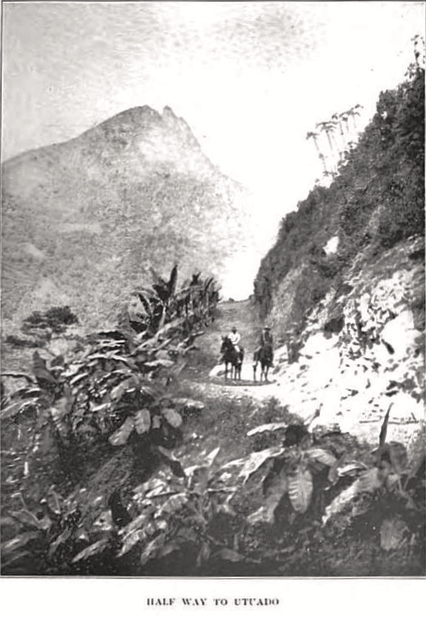 |
|
| Utuado Mountainside 1898 Puerto Rico two men ride horses on dirt road |
When I think of Puerto Rico
in my minds eye
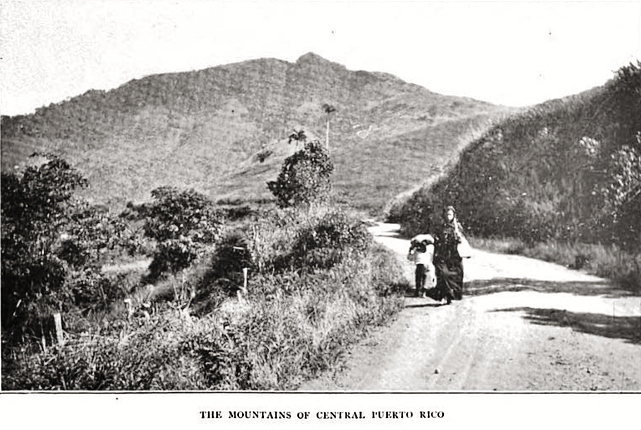 |
| Central mountainous zone 1898 Puerto Rico |
Puerto Rico stuck in the persistent state of 1898. Unwilling to change.
A one hundred year old child.
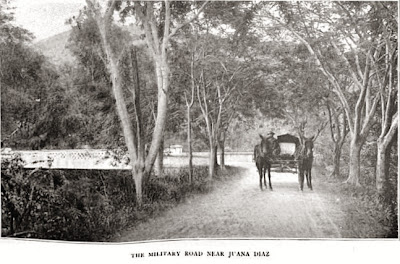 |
| Military Road Juana Diaz 1898 Puerto Rico Horse drawn carriage |
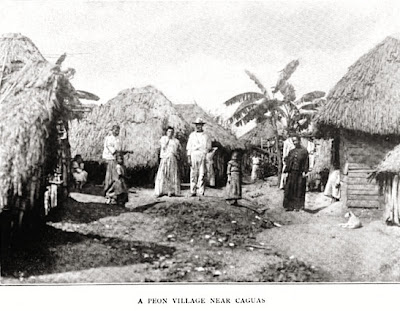 |
| Caguas, Puerto Rico 1898 village |
Economically poor then and now.
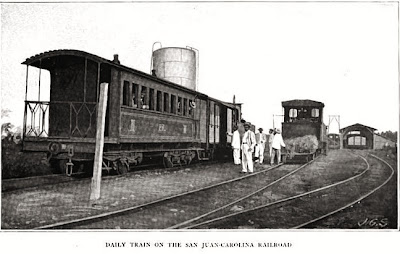 |
| San Juan Railroad 1898 |
Puerto Rico is 1898 encapsulated.

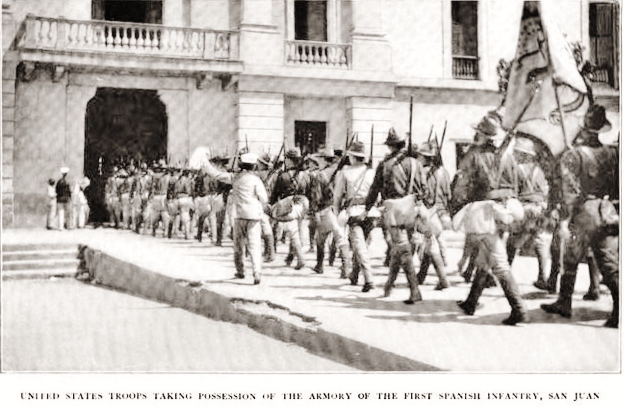
Puerto Rico refusing to change remains a commonwealth suppressed. A prize of the Spanish American war. An American possession needing protection since 1898. Protection from what exactly, I cannot explain. Culturally rich, with traces from every corner of the planet proudly waving two flags. Bearing children with double identities. Holding on tightly to illusions of self government. Forever scrambling in frustration caused by this duality.
Puerto Rico, there is no denying your richness, beauty and my love for you.
Puerto Ricans have contributed and helped build the United States of America we all enjoy today by serving in the military, as government officials, teachers, doctors, lawyers, artist and have even gone into space.
1. I don’t find it funny that the only portrayals of Puerto Ricans media chooses to broadcast across all of their platforms are negative stereotypes.
When media abuses their power bombarding the entire world with negative stereotypes without any attempt at presenting positive images of the Puerto Rican community its NOT funny.
It IS irresponsible, racist and unacceptable.
Why hasn’t media (in this case ABC networks) present 100 positive images? 50? 20? or even 10?
2. It poisons the human collective consciousness.
As humans we need to feel heard and respected, like we have a voice and that our voice matters. In 1943 American professor of psychology, Abraham Maslow, listed the Basic Human Needs as: Physiological needs, Safety needs, Love and belonging, Esteem, Self-actualization and Self-transcendence.
The imbalanced views the media have created are abusive, toxic and destructive to us all.
What do you think happens when generations of children grow up without seeing their reflection in the world? Do they grow up feeling like they are not good enough? Do they feel like they should be hidden away in the same way they are kept out of history books and school books?
3. Responsibility. As human citizens of this planet it is our responsibility to care for it and make it better for our children, our families, our communities and future generations.
If you do not feel comfortable taking action. Please support those that do.
It’s 2012. We know better. Let’s do better. Be a catalyst for change.
Please sign and share this petition.
CHANGE.ORG
You do not need to be Puerto Rican to be offended by inequality and racism. People from Finland, Spain, Portugal, Venezuela, Dominican Republic, Switzerland,Trinidad and Tobago, France and the Czech Republic have already signed. Won’t you?
Notable People raising awareness on this issue:
US Rep. José Serrano, Rep. Nydia Velázquez, Assemblyman José Rivera, Resident Commissioner and a non-voting member of the US House of Representatives Pedro Pierluisi, Former New York City Comptroller Bill Thompson, Julio Pabon and Lucky Rivera creators of Boricuas for a Positive Image, Puerto Rican actor Darlene Vazquetelles, and director Carlos Jiménez, who recently formed the nonprofit Puerto Rican Alliance for Awareness (PRAA): Raul Colon creator of Papa Heroes and VegLatino, Julio Varela creator of Latino Rebels
~~~~~~~~~~~~~~~~~~~~~~~~~~~~~~~~~~~~~~~~~~~
Links & Resources for Puerto Rico and its History
Last Friday on my weekly visit to my parents house the subject of old photos came up. Enthusiastically, I began digging around closets in search of old boxes and bins. I hit the jackpot when I found these super cool photos of Chicago in the 60’s. At first I thought my Pops had snapped these photos because he’s such a gadget junkie but it turns out its my Mom who is the historical documentarian.
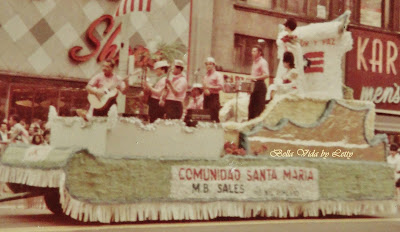
In 1968, about a year after my Mom moved to Chicago from Puerto Rico her cousins took her to see the Puerto Rican Day Parade in downtown Chicago. It was an annual event the entire community looked forward to. First a fabulous parade then more festivities at its conclusion in Humboldt Park with performances and music.
They are far from professional shots but they are a treasure because they do capture the enthusiasm and tangible excitement of the people present at this Puerto Rican cultural event. Using her Kodak camera my Mom has captured 1960’s fashion trends, hairstyles and dress.
They also capture the wonderful multi-story brick architecture of the windy city as well as the businesses that occupied them; Lerner Shops, Karolls Men’s Wear & Woolworths. Stores used eye-catching advertising of all sorts including filling windows with slogans in colorful neon lights.
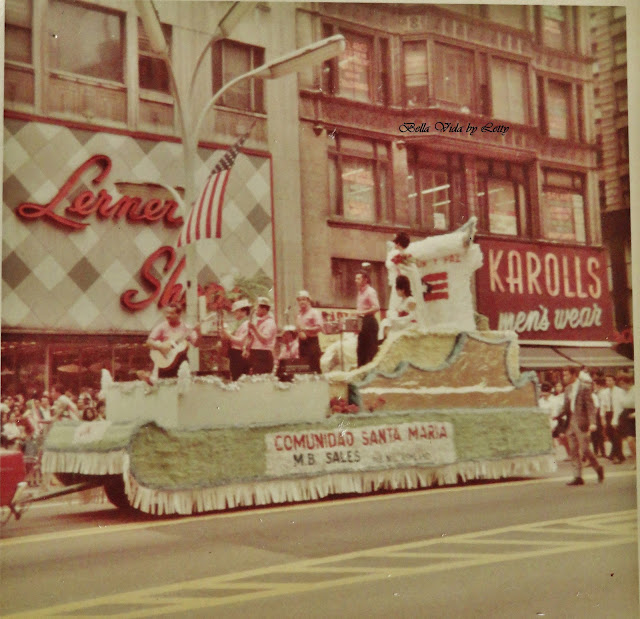
This is my favorite photo of the bunch for many reasons. First, because we have the American flag swaying in the breeze like a hand inviting this elegant procession forward. The American flag is then greeted by this float sponsored by Comunidad Santa Maria, with the Puerto Rican Flag proudly exhibited under the words Amor y Paz (Love & Peace). Second is the fact there is a band playing live music. I can imagine the Caribbean musical notes echoing loudly against the tall buildings carried away by the wind bringing swaying hips and smiles to caressed ears. Lastly, it gives us a clear example of how Puerto Ricans have adapted or assimilated to American culture of the 1960’s in the dress of the beautiful ladies on the float. The women attired in elegant long ball gowns holding bright blood-red roses, the perfect contrast to their matching white gloves. Donning wigs in the hairdo of the time, the beehive, carefully balanced on their heads.
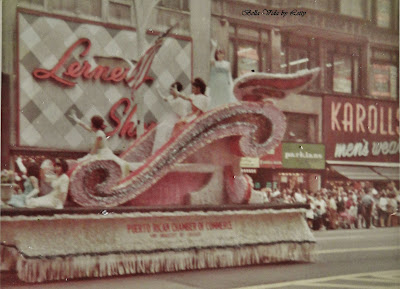
On the Puerto Rican Chamber of Commerce float we have a handful of elegant ladies in long formal gowns of varying pastel shades with formal long white gloves. Waving left and right looking like they belong in a beauty pageant. Especially the ones wearing crowns.
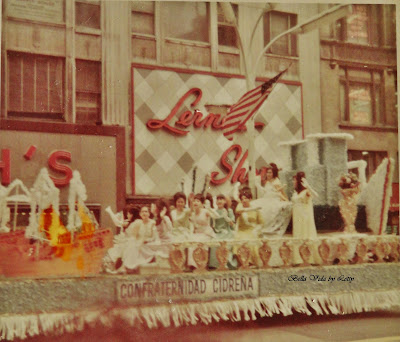
The Confraternidad Cidrena float has even more beautiful young ladies in formal wear. Only one woman gets to wear a crown on this float but they all seem to really be enjoying themselves energetically waving to the crowd in every direction. One or two seem to be responding to someone they saw in the crowd. Maybe a family member or friend. (Cidra is a town located in Central Puerto Rico.)
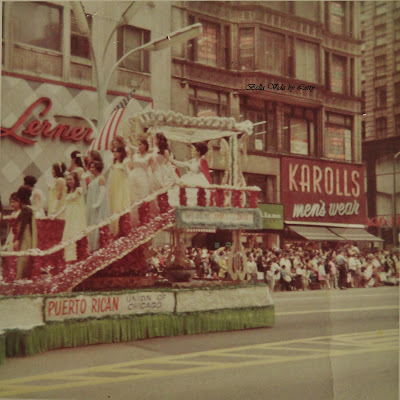
This two story float is sponsored by the Puerto Rican Union of Chicago. It’s amazing how many young beautiful elegant women there are representing our culture. Each wearing a slightly different gown with each head of hair perfectly groomed either with a ribbon or the perfect curls. The queen of this float wears a red cape over her wide white skirted dress reminding me of a Puerto Rican folk bridal doll.

In the next floats we have examples of the type of corporate sponsors who participated in the parade. The name of the beer company is cut off in the photo but I can make out the Meister. I did find a reference to a Meister Brau Inc. a 1960’s Chicago brewery later purchased by Milwaukee based Miller Brewing Co. The immense horses are beautifully adorned and expertly driven by a man in costume.
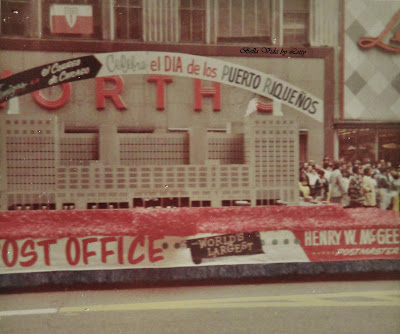
This float says “El correo de Chicago celebra el dia de los Puertorriqueños.” The worlds largest post office celebrates the day of Puerto Ricans. Puerto Ricans are big business for the post office sending plenty of letters and care packages back and forth from the island.
A little history lesson . . .
I was a bit shocked at first when I read this but then not so much the event is placed within context of the period. The 1960’s saw Rock n Roll, Hippies, the first Man on the Moon, the Vietnam War, the assassinations of President Kennedy and Martin Luther King Jr., war protests and the Civil Rights movement.
Arriving from a different country meant adapting to a new place, new customs and new people who did not understand that not everyone who spoke Spanish was Mexican or that speaking Spanish did not mean they were not American citizens. Puerto Ricans in Chicago encountered racism in many forms; having their rent raised so they could not afford to live in certain areas forcing moves to other neighborhoods, being charged higher prices at stores because they were not fluent in the language; racial profiling by police . . .
My take away . . .
I’ve read about the riots from various sources and have come to the conclusion that the riots came in response to years of racist abuse from police, politicians and other citizens upon the Puerto Rican community. The murder of a young man by police was THE last straw. The riots mark a time in history for change. Young Puerto Rican men and women fought back against armed police dressed in riot gear releasing trained attack dogs on them. Racism and abuse of power would not be tolerated any longer. The riots made it clear to police and local government change must happen.
More importantly these events brought to light the issues that needed addressing as well as the education that needed to be spread inspiring community activism and education programs. One of the purposes of the parade as well as community organizations was to educate others about Puerto Rico, its American citizenship, culture, customs and bilingual people. I’m in awe of the people who came together the next year and every year after that to continue the Puerto Rican parade cultural educational campaign.
Now 45 years after that first parade I can report Puerto Ricans are still seen in a negative light. These are the consequences of denying a variety of faces, shapes, sizes and cultures to be seen on television, movies or even be mentioned in history books. A vast majority of Americans don’t even know we are citizens. Puerto Rico has been part of the United States for over a century contributing and building the America we live in today.
I know what I will do. I will continue to write poetry and stories, create all kinds of art and share it with you and the entire world. I will be a catalyst for change.
What you can do:
– Support your local community and local organizations.
– Address local issues where they matter, your local government.
~~~~~~~~~~~~~~~~~~~~~~~~~~~~~~~~~~~~~~~~~~~~~
The following is a wonderful list of resources for more information on the Puerto Rican Day Parade as well as the history of Puerto Ricans in Chicago.
Puerto Ricans in Chicago on Wikipedia
Spanish Action Committee of Chicago Historical Archives
Puerto Rican Parade on NBC Chicago
~~~~~~~~~~~~~~~~~~~~~~~~~~~~~~~~~~~~~~~~~~~~~
Do you have any Puerto Rican day Parade photos?
If you do, I would LOVE for you to share them with me.


These photos feature a few hand embroidered handkerchiefs from my collection. My grandmother passed on her love and appreciation for the beauty and quality of hand made works to me like her grandmother before. She taught me to sew and embroider as a small child. I think we started when I was four or five. My Dad bought me a safe giant ugly green plastic needle kit which I hated because it wasn’t like grandmas. But when no one was looking Abuela let me use ‘real’ needle and thread. It makes me laugh to remember how she kept her colorful threads protected inside of an old cookie tin.
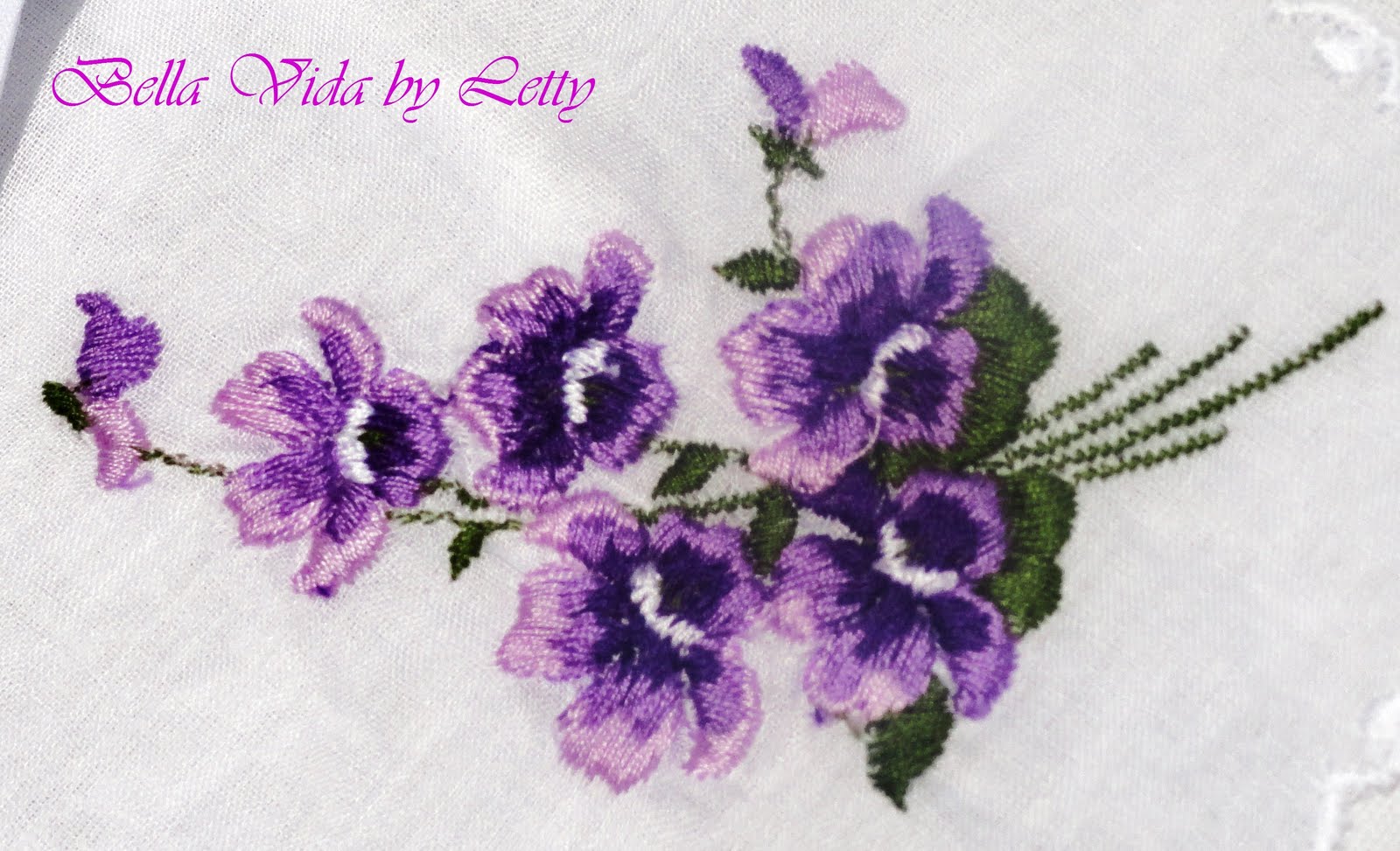
During World War I Puerto Rican embroidery became known worldwide for it’s quality. Production was performed by contracted women and children. Due to US influence Puerto Rico’s three largest exports during this era was tobacco, fruit and cotton goods. To prepare young girls for careers educational policy in the early 1900’s was modified to spend half the day on traditional subjects and the other half learning needlework.
Local contractors would distribute bundles of cut fabric ready to be sewn to women all across the island. The women would return the finished products with beautifully sewn and embroidered details done completely by hand.


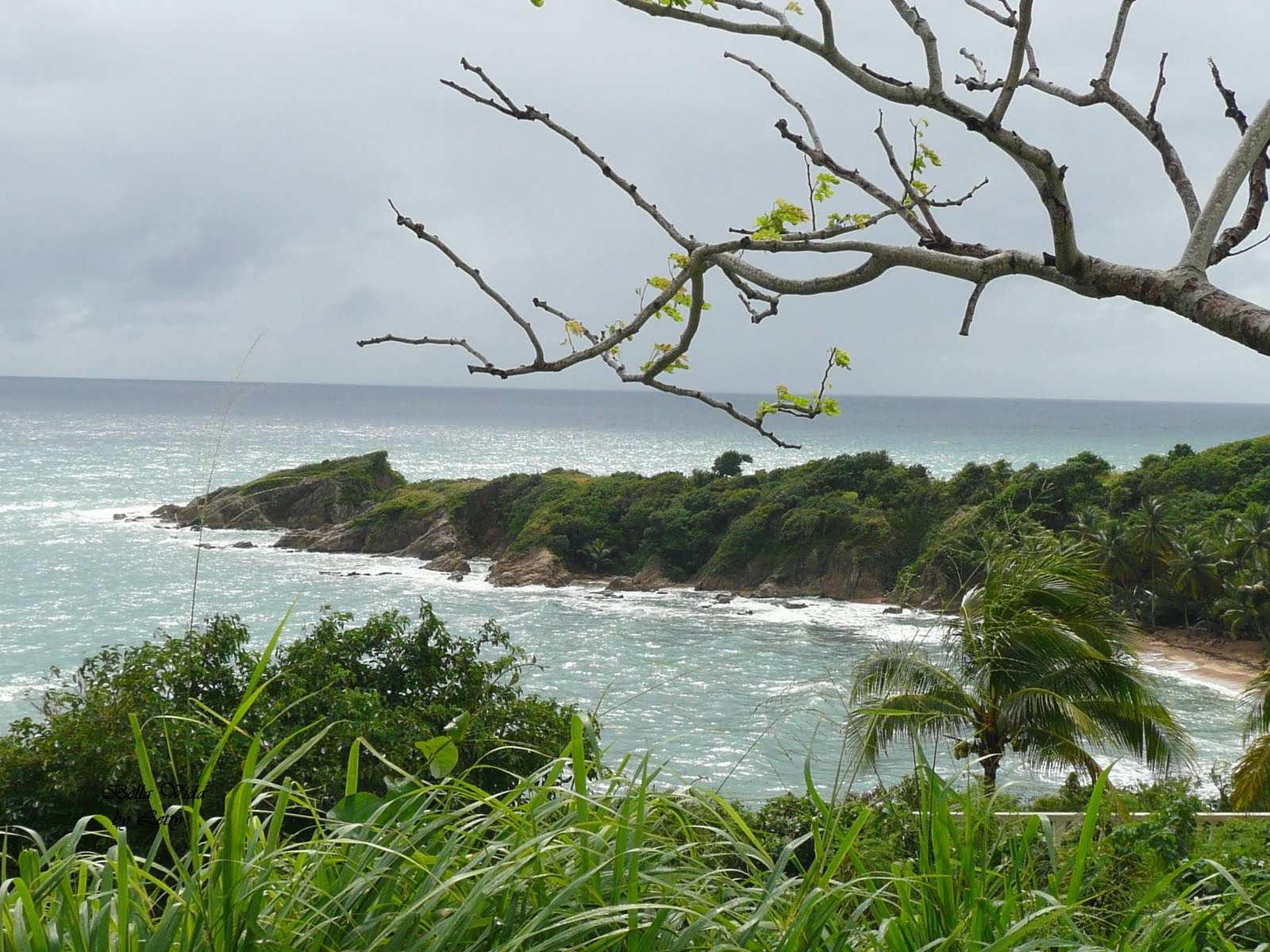 |
| Maunabo Puerto Rico |
In photography you can change the way your subject is perceived by changing the camera position. The position, direction and height of the camera define the point of view of a picture.
In literature the narrative point of view determines through whose perspective the story is viewed.
In painting perspective is an approximate representation of an image as it is seen by the eye.
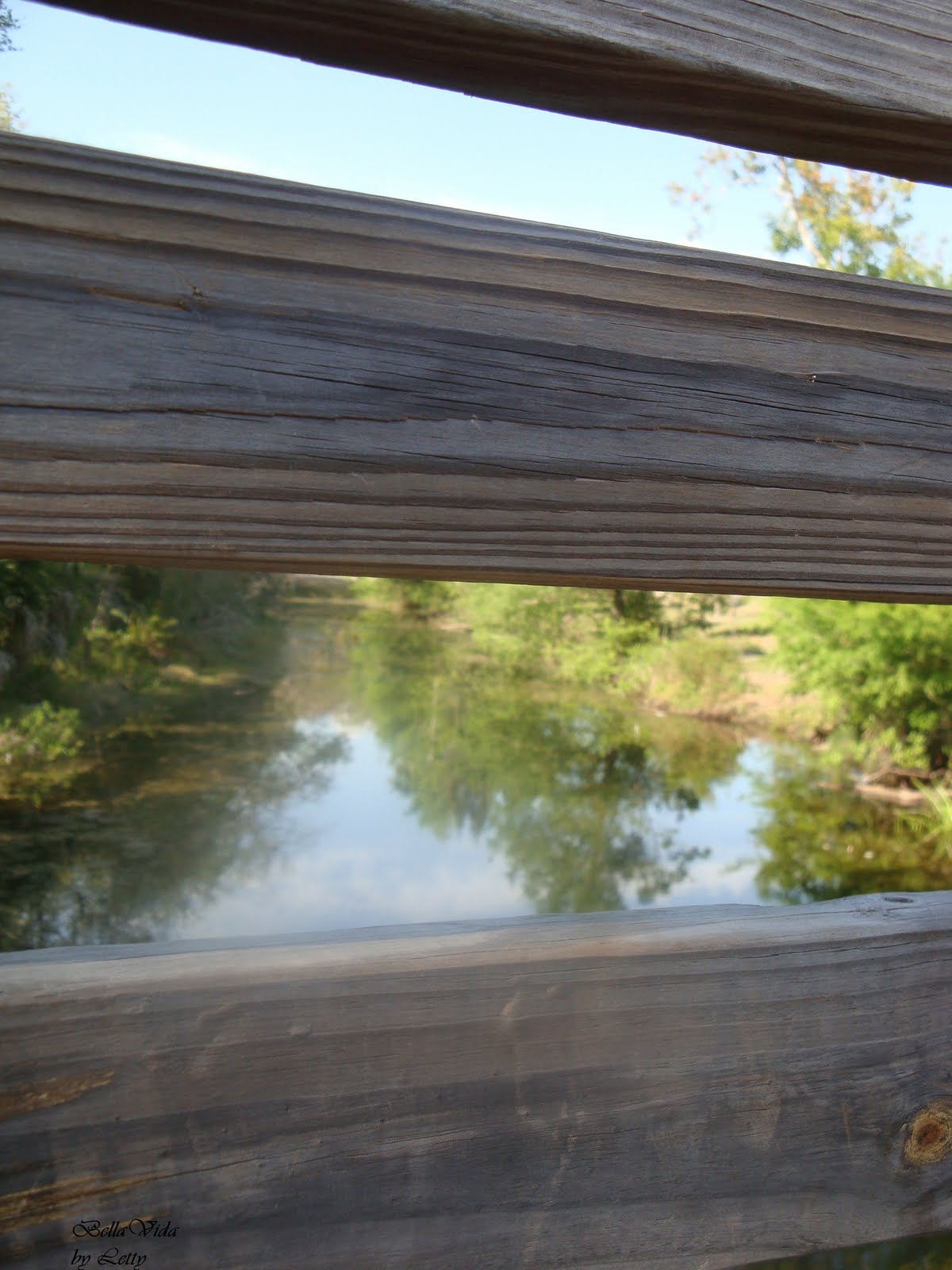 |
| Tree Tops Park |
As an artist, when I’m creating or brainstorming I’m constantly searching for a different point of view. In each of my photographs I am revealing my style. If you look at the photos above; they were each taken at different locations, different cameras and even different years but there is something tying them together. It is my palpable point of view.
It’s my style = the brand I’ve created as: ©BellaVidabyLetty
When you are creating, painting, writing, etc. how do you decide upon point of view?
~~~~~~~~~~~~~~~~~~~~~~~~~~~~~~~~~~~~~
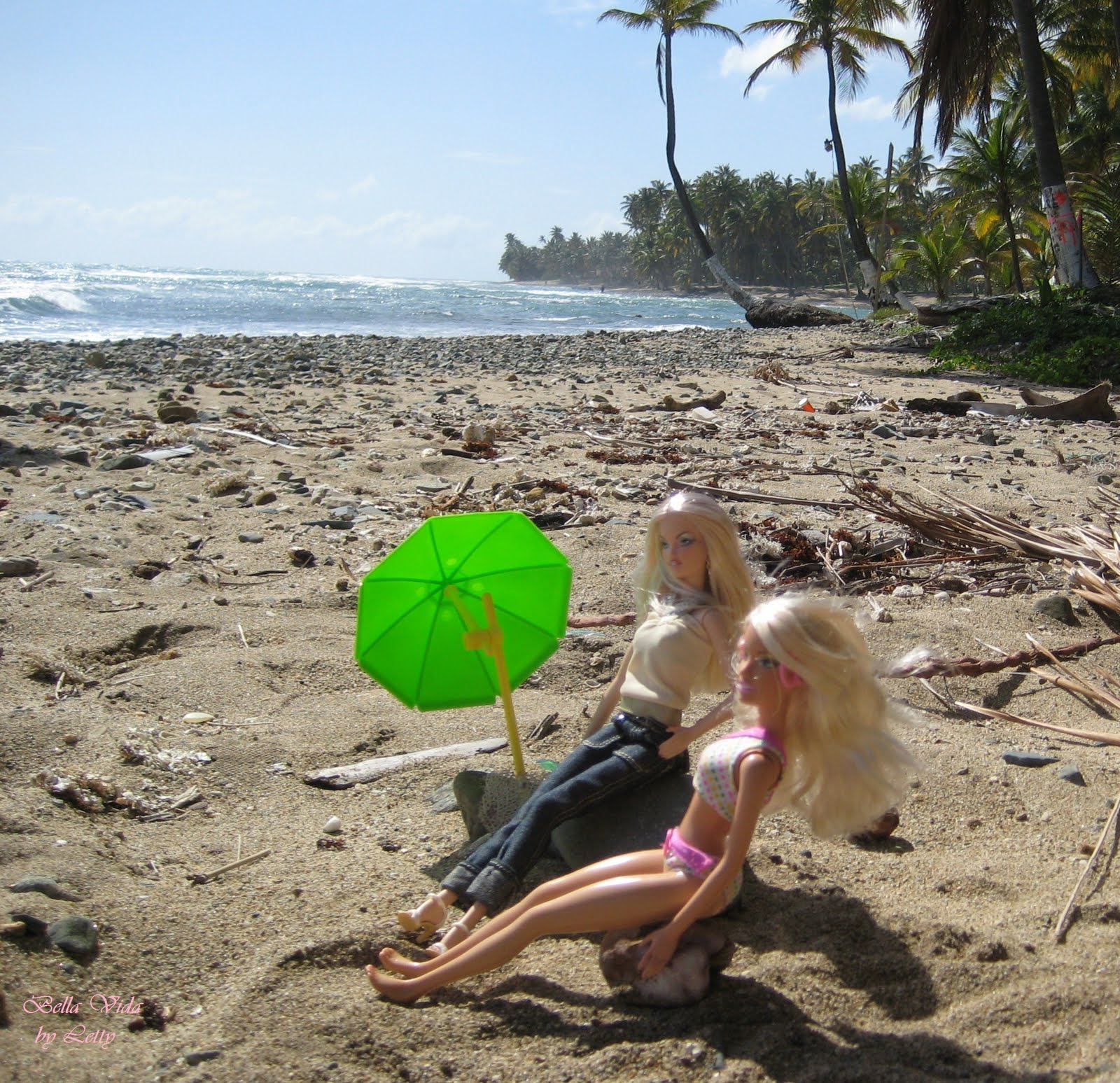 |
| Barbie goes to Puerto Rico Guayama 2008 |
Being an artist allows me to be playful and imaginative everyday of my life. I would never want to do anything else.
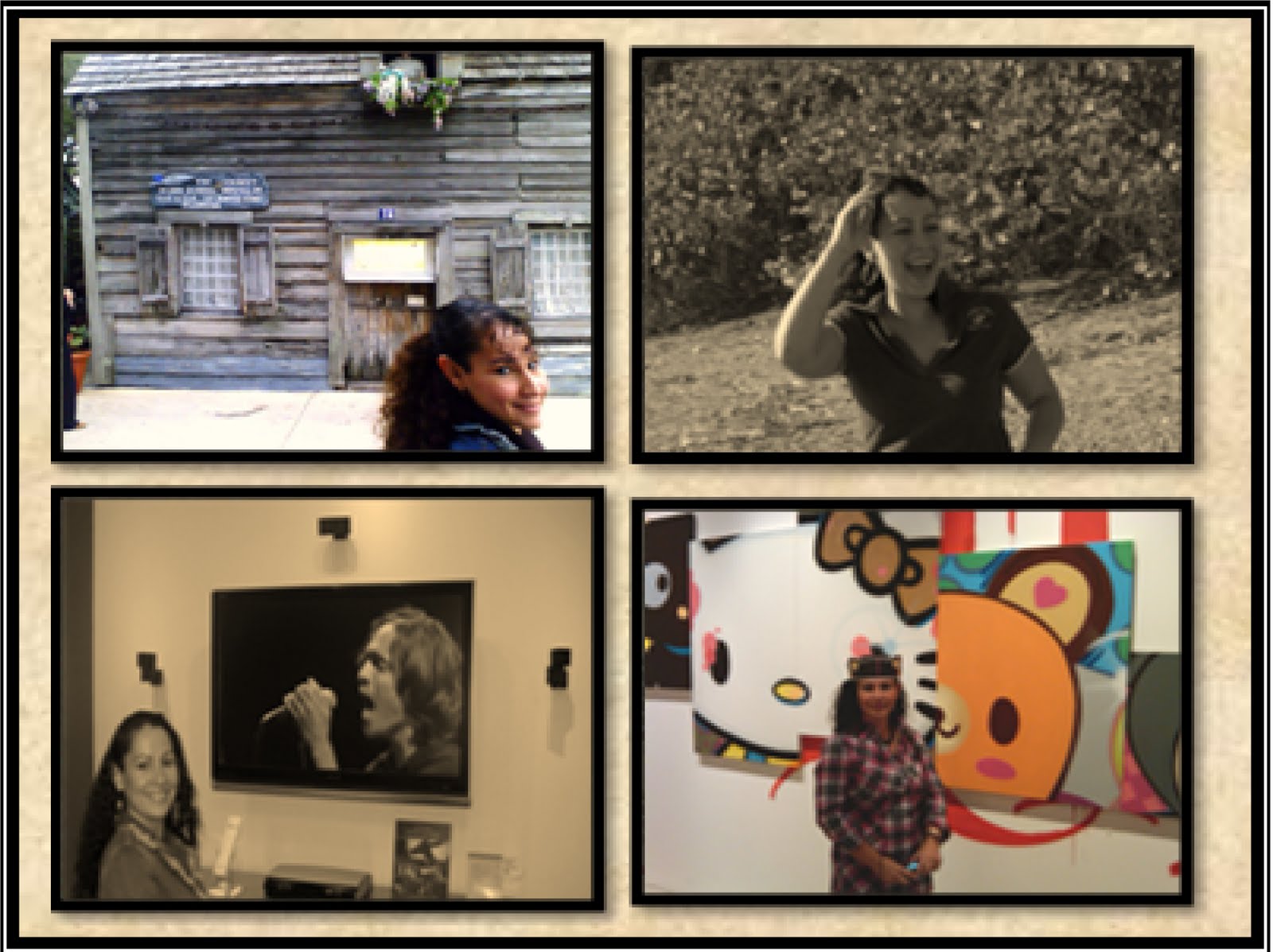
Here’s a collage of photos taken of me over the past few years. I’m running away laughing in St. Augustine in the top left; cracking up hysterically on the beach in PR on the right; getting serenaded at Plaza las America’s by Incubus’ Brandon bottom left; and lastly wearing Choco cat ears at the Hello Kitty bday celebration. Who knew I was so playful? ;P
Do you have silly photos of yourself to share? Go ahead and post your link in the comments.
.
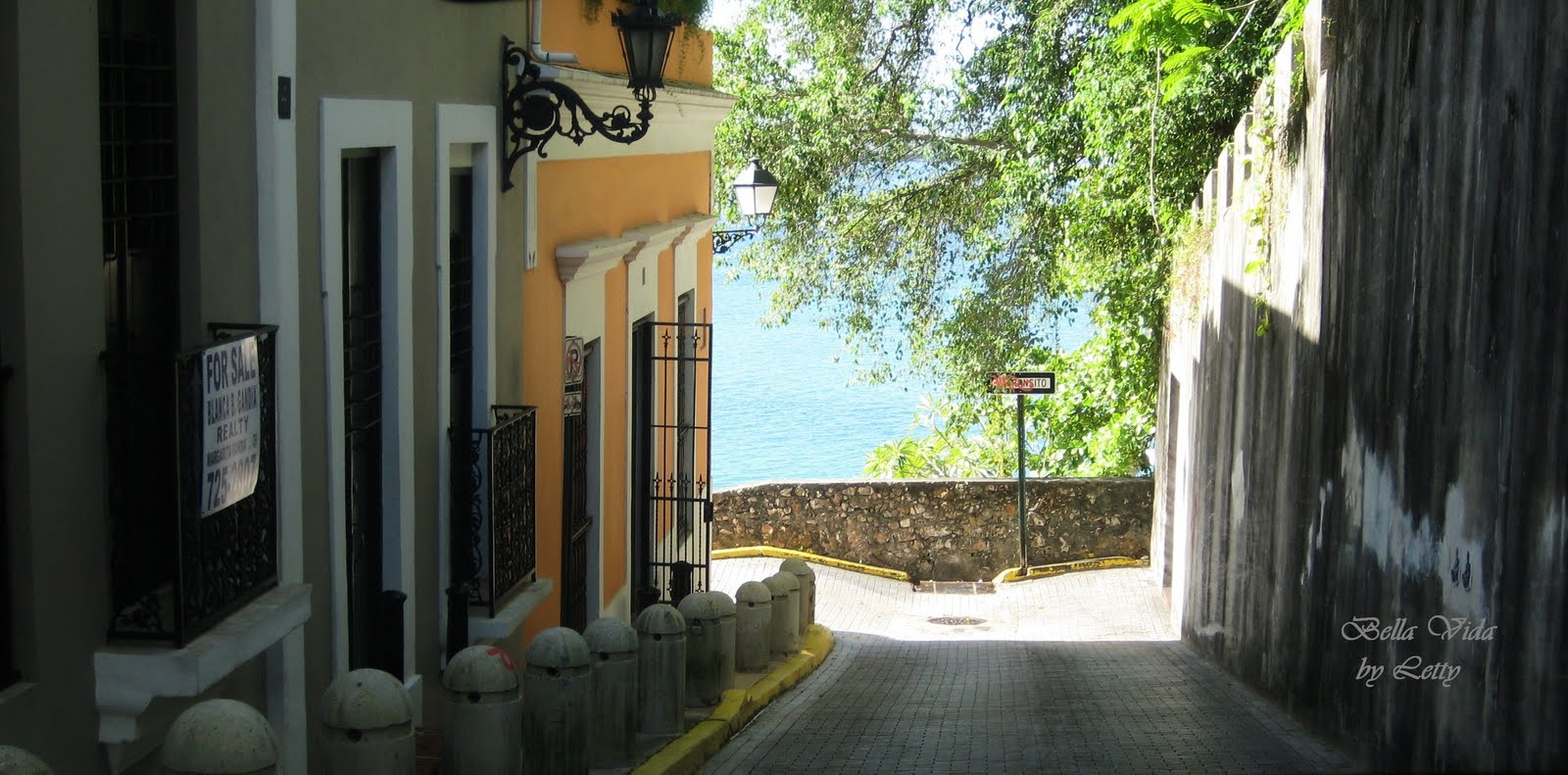 |
| San Juan Puerto Rico 2008 |
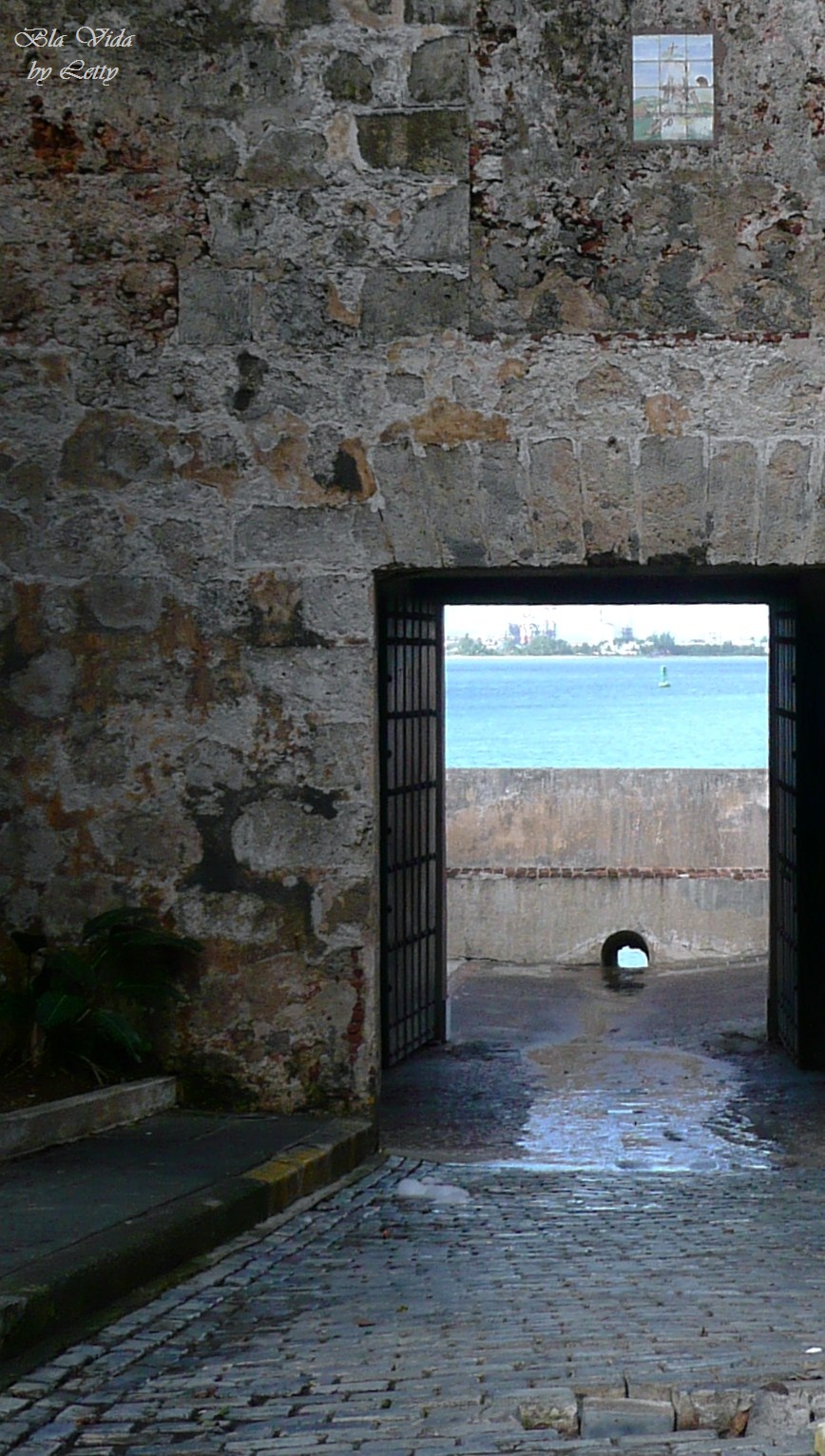 |
| La Puerta de San Juan Puerto Rico 2008 |
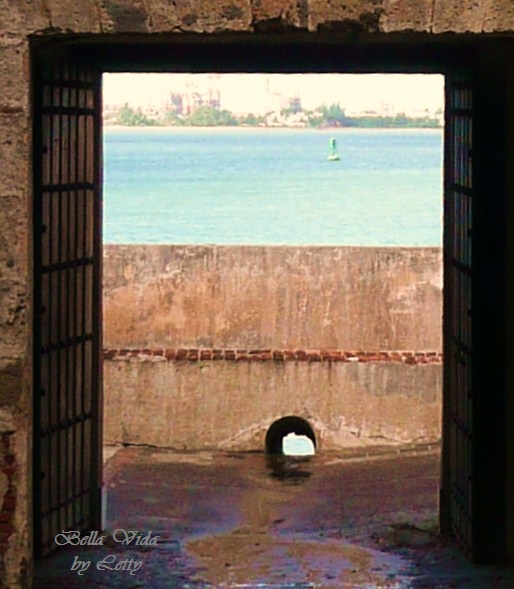 |
| La Puerta de San Juan Puerto Rico 2008 |
“Fiction is a piece of truth that turns lies to meaning.” Dorothy Allison
.
 |
| Old San Juan Puerto Rico Sunny Day 2008 |
My favorite place on the planet is Old San Juan Puerto Rico. I never tire of walking street after street. Each visit holds new surprises. If you end up walking with me you’re in trouble because I can walk forever.
I love the off balance sensation of stepping on gray worn cobblestone laid centuries before. I love the mystery of following unplanned paths that will eventually lead me to the deep blue oceans edge. There is no wrong way. There is no getting lost. Taking the challenging uphill walkway past a music school I saunter to the pace of bomba which will transform to salsa, reggaeton or merengue as I continue onward. At the top of Calle Cristo my eyes are greeted with an explosion of colors. On every facade is a festival for the eyes in a pattern eluding repetition. My eyes feasting on colors like candies; pilon lollipops pasta de guayaba, coco-pina, miel con almendra, ajonjoli, limber de parcha, papaya-lechoza and crema de coco.
 |
| Old San Juan Puerto Rico – rainy day 2008 |
Seeking relief from the sun or natures other elements the museums, art galleries and studios became my playground Shops and boutiques display cultural treasures; local handmade arts and crafts. Admiring and appreciating every piece made on this island fills my soul with inspiration. I feel a camaraderie with these artists. The commonality of artistic qualities and roots to the island is very comforting. I am less lonely knowing there are others like me.
I feel connected to this place with every swirling sound, graced texture, dancing vision and pleasing aroma. I feel connected by family, by blood by DNA from the ends of my long curly black hair to the tippy tips of my aura. Every cell of my being has been switched ON to happy.
 |
| La Fortaleza – Palacio de Santa Catalina Puerto Rico – rainy day 2008 |
I get that sensation each time I visit my favorite place.
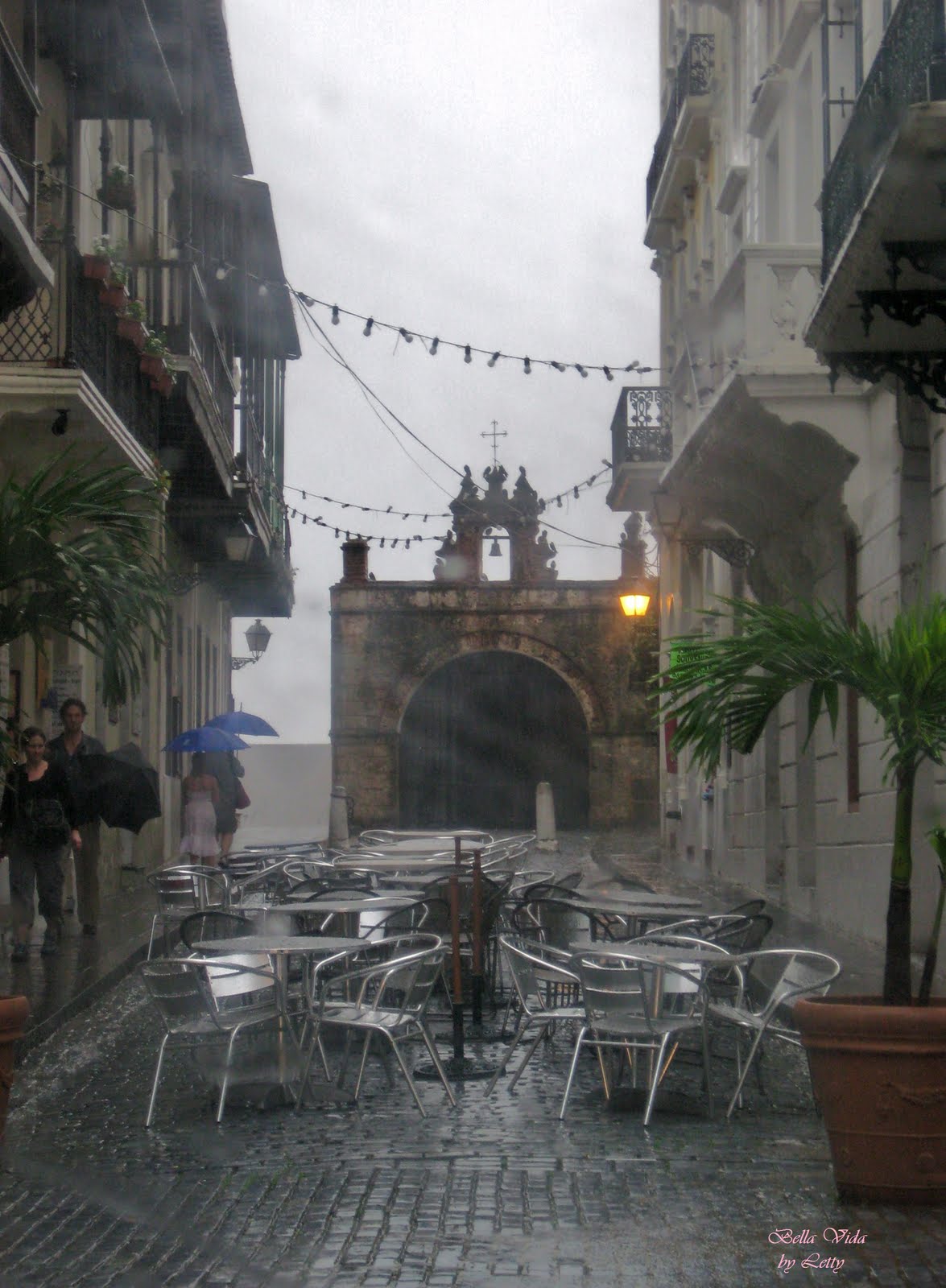 |
| Capilla del Cristo Old San Juan Puerto Rico 2008 |
I love pictures of the rain, rainy days, rain washed settings . . .
The clouds conceal the light leaving it’s affects on how color is perceived.
Dark clouds stir emotions like a warning of something coming inciting the feeling of needing protection.
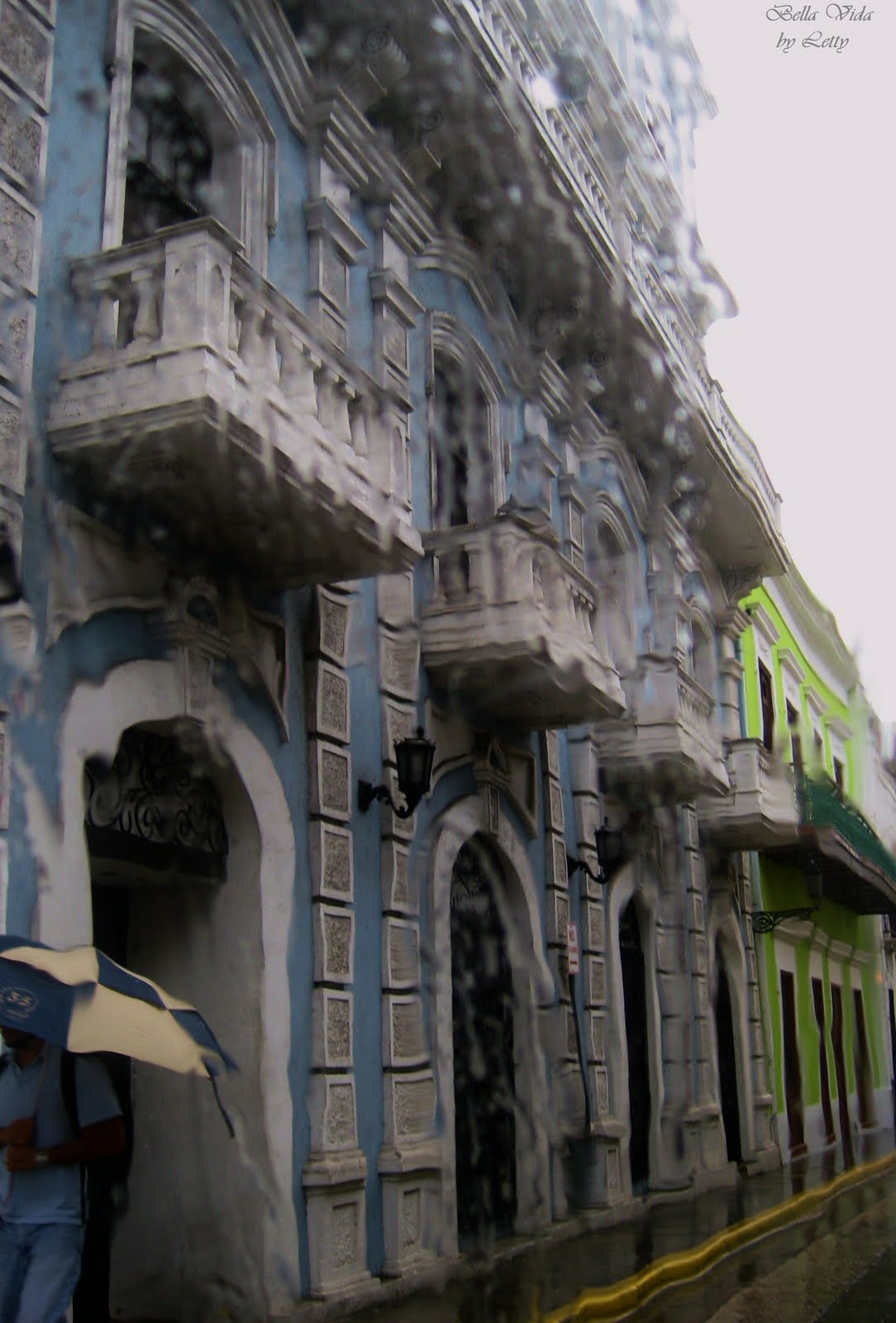 |
| Old San Juan Puerto Rico 2008 |
I love rain water reflections. Precious diamond moments when we see ourselves projected outside of our bodies. Reminding us that we are here. We are alive. Ceaselessly taking part in the endless chain of being affected and affecting the universe.
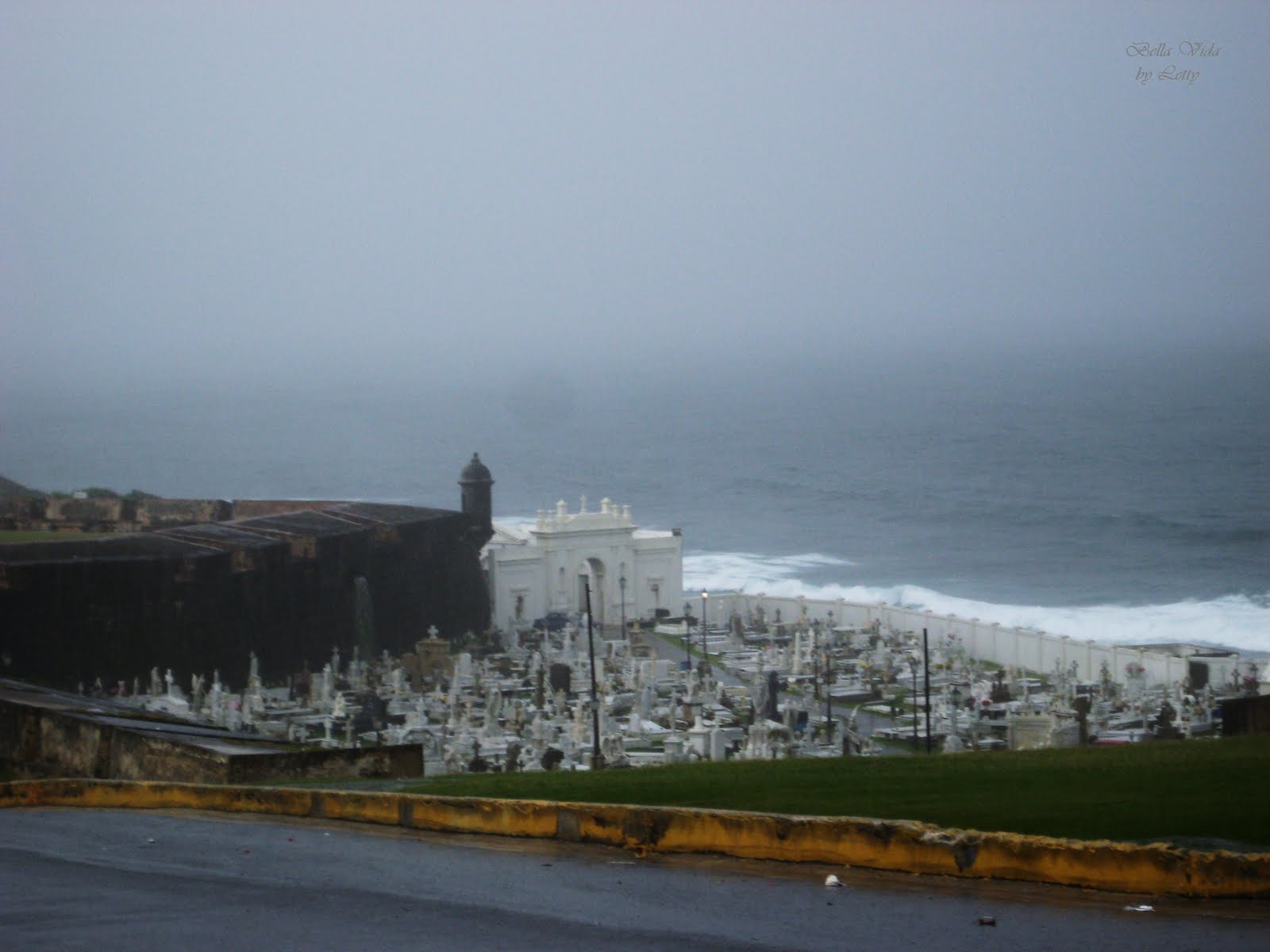 |
||
| Santa María Magdalena de Pazzis Cemetery Old San Juan Puerto Rico 2008 |
 I'm based in the wonderful state of Florida and I write about travel, food, experiences and events. I share tips and tons of photos. If you have a question about visiting Florida let me know how I can help you.
This blog accepts ads, sponsorships, affiliate links, reviews and other forms of compensation. Assume everything is compensated . Honest opinions are for useful information and entertainment. Support BVBL Sponsors by Clicking on these Ads






 Copa America 2015 Chile Sweepstakes Enter Now
 5 Things I Wish I Knew Before I Started Blogging
 Cities of the Dead ~ New Orleans Cemeteries
 Travel: Doors of Savannah’s Historic District
 Exploring the French Quarter in New Orleans, Louisiana
 Beautiful Wanderlust Jewelry
 10 INSPIRING TRAVEL COFFEE TABLE BOOKS
 The Lincoln Memorial in Washington Dc
 Best Gift Ideas for Travelers a Gift Guide
 The Exorcist Steps in Georgetown Washington DC